


Navigating the Future of Aviation Challenges and Innovations in Sustainable Aviation Fuel
 PAC L.P.


As featured in ThaiOilGas.com
Climate change is currently affecting all living things and has become a major concern across various sectors. The aviation industry contributes to this environmental impact, as it accounts for 2% of global greenhouse gas emissions. In response, there has been a shift toward energy-saving policies and alternative energy sources. One such source is Sustainable Aviation Fuel (SAF). This new renewable energy option can reduce carbon dioxide emissions by up to 80% compared to traditional aviation fuel. This shift is especially important as the aviation industry aims to reach its Net Zero target by 2065.
Chemical House & Lab Instrument specializes in providing high-quality laboratory testing equipment and solutions for the industrial sector. The company places great importance on SAF technology. To support this, it organized a seminar to exchange knowledge with experts in the fields of energy and the environment. The seminar covered topics such as SAF production, certification requirements, and technologies used in SAF production.
The event took place at the Novotel Bangkok Bangna in July. Its theme was “Navigating the Future of Aviation Challenges and Innovations in Sustainable Aviation Fuel (SAF).”

Laying the Foundation for Building an SAF Production Plant

Mr. Suraporn Petchdee, General Manager of BSGF Company Limited (BSGF) revealed that BSGF produces SAF primarily from used cooking oil (UCO). Additionally, producers can make SAF from other types of waste oil. BSGF sources, produces, and distributes all raw materials under ISCC certification standards. The choice to use waste oil as the main feedstock clearly addresses sustainability concerns.
Currently, the public consumes about 3–4 million liters of vegetable oil per day. Collecting roughly 30–40% of this, or around 1 million liters, seems feasible. If that happens, the company plans to design an SAF production unit with a capacity of 1 million liters per day. At present, BSGF can collect about 50–60% of the required oil. BSGF has also partnered with its major shareholders: Bangchak Corporation Public Company Limited, BBGI Public Company Limited, and Thanachok Vegetable Oil (2012) Company Limited. Together, they aim to communicate and promote awareness about the benefits of collecting used cooking oil for SAF production.
In the future, UCO supply may prove insufficient to meet SAF demand in Thailand. In that case, the government will consider allowing crude palm oil as a feedstock. However, crude palm oil would first need to receive certification from the ISCC. The ISCC currently prohibits its use due to potential negative impacts on the entire food supply chain. This is particularly relevant since Europe produces limited palm oil. Nonetheless, Thailand has an abundant supply of palm oil. Therefore, the country could possibly receive an exemption to produce SAF from crude palm oil. This would also help promote the domestic agricultural sector.
The Benefits of SAF
Moreover, using SAF can reduce carbon dioxide emissions by up to 80%, while also providing various other benefits. Environmentally, it helps keep UCO out of the ecosystem. There, UCO can combine with waste to form fatbergs, clogging drainage systems and increasing the risk of flooding. In terms of health, it reduces the reuse of cooking oil. In turn, this lowers health risks for consumers, such as clogged arteries and cancer. Economically, it also creates an additional source of income for the public through the sale of UCO.

SAF Market Outlook
The SAF market will likely grow gradually as countries implement SAF usage policies. For example, Europe has announced a 2% SAF blending mandate starting in 2025. In Thailand, there is a plan to introduce a policy requiring a 1% SAF blend in 2026. As blending percentages increase according to each country’s roadmap, demand for SAF should grow steadily. However, competition in the market will likely intensify as more producers enter the space. Thailand is in a strong position to compete globally. Domestic SAF production will begin early next year with BSGF’s plant under the Bangchak Group.
In the future, global awareness of environmental issues and the push toward Carbon Neutrality and Net Zero will increase. SAF is the best solution for the aviation sector. Therefore, demand will likely rise. At the same time, there may be challenges related to feedstock. If the world relies primarily on UCO, supply may become insufficient. This would prompt the need for further studies to identify alternative feedstocks.
From Feedstock to Airport
Currently, Bangchak Corporation Public Company Limited and BSGF Company Limited are constructing an SAF production plant. They expect to complete it by the first quarter of 2025. Once completed, SAF products will be available to consumers. The target customers will include both domestic and international airlines interested in using SAF. The companies will export any surplus after domestic sales to international markets. BSGF’s SAF production process involves Thanachok Vegetable Oil (2012) Company Limited, which supplies the feedstock for production. After production, Bangkok Fuel Pipeline and Logistics Company Limited (BFPL) will transport the fuel through its pipeline system. This system connects to Don Mueang International Airport (DMK) and Suvarnabhumi International Airport (BKK).
Clearly, the benefits mentioned align with the BCG (Bio-Circular-Green) Model. This model promotes holistic economic development by focusing on three key economies: Bioeconomy, Circular Economy, and Green Economy. This approach will undoubtedly enhance Thailand’s competitiveness on the global stage.
Developing Environmentally Friendly Fuel Businesses

Mr. Cheerapan Panyanan, Executive Vice President – Biodiesel Business Operations Group of Energy Absolute Public Company Limited (EA) has announced that EA has begun investing in the construction of an SAF production plant. EA expects to complete the plant around the third quarter of 2024. Commercial operations should then commence in the fourth quarter of the same year.
In terms of sourcing raw materials, we have invested in Hydroprocessed Esters and Fatty Acids (HEFA) technology. This technology converts vegetable oils and animal fats into hydrocarbons. In the short term, we will primarily rely on used cooking oil (UCO) as the main raw material. We anticipate that domestic UCO will be sufficient to meet our needs for the next five years. However, global regulations may mandate an increased percentage of SAF in aviation fuel. If so, we will need to depend more on imported raw materials. In the long run, that reliance may not be sustainable.
To support future business development and raw material sourcing, EA has established a subsidiary, Green Technology Research Co., Ltd. (GTR). This company will focus on researching and developing future business opportunities, including potential raw materials. We see several promising possibilities, such as waste derivatives from palm oil. Examples include oil from factory wastewater, oil attached to bleaching clay, and animal fats. Additionally, we are in discussions with both the government and international partners about future oil crops. Currently, we are working with the government on promoting jatropha oil. The Federation of Thai Industries is pushing this initiative forward. We also seek collaboration with the Ministry of Energy, the Ministry of Agriculture and Cooperatives, and the Ministry of Industry. Together, we aim to drive and promote sustainability and environmental friendliness within the aviation industry.
The Long-Term Outlook for SAF
Mr. Cheerapan envisions the long-term prospects of the aviation fuel market. In his view, SAF is a promising investment that can contribute to the longevity of the planet and its inhabitants. Current pricing mechanisms are not yet fully clear, and the technology is still developing. However, he anticipates that production costs will decrease significantly within the next 5 to 10 years as technology advances. This would keep prices from passing on to consumers and promote sustainability.
He emphasized that achieving sustainability requires collaboration from all sectors. At present, government policies play a crucial role in supporting and driving this initiative forward. Thailand, as an agricultural country, has high raw material potential, with many products derived from key agricultural crops. If the government recognizes the long-term plan and supports the policies, Thailand could significantly outpace neighboring countries in future competition.
Challenges and Risks on the Path to Becoming a Green Airline

Mr. Chaiyong Ratanapaisalsuk, Director of Corporate Strategy & Development Department of Thai Airways International Public Company Limited stated that airlines flying to European countries, such as France or Sweden, currently must use SAF at a rate of 2%. These requirements follow regulations set by each country. Thai Airways is participating in meetings with sub-committees to advocate for the use of SAF. In addition, the Civil Aviation Authority of Thailand (CAAT) and Thai Airways are working together to establish SAF blend targets. These targets start at 1% by 2026 and increase to 3–5% by 2027. The government is also making efforts to support this initiative. However, the parties have not yet finalized the agreement, and further discussions are necessary.
Cost and Competition Risks
From the airline’s perspective, a major risk in the aviation fuel business is cost. Currently, the cost of jet fuel accounts for about 30% of operational expenses. Adding SAF could increase this cost by 4–5 times compared to regular fuel. However, if the SAF blend is at 1%, airlines can still manage the adjustment. The high cost of aviation fuel could potentially impact passengers if fuel prices remain elevated. Typically, airlines charge a fuel surcharge. In the future, however, there might be additional costs such as emissions charges and carbon taxes. Airlines are reluctant to pass these costs on to passengers. Therefore, it is crucial for the government to establish clear policies to help compensate for these expenses.
Another risk is market competition. Regulations might apply only to domestic airlines, while international airlines are not subject to the same rules. In that case, the result is an unfair competitive environment. This situation puts domestic airlines at a disadvantage, bearing the costs and risks alone. Moreover, domestic fuel prices may not be competitive with international markets. This could hinder the government’s plan to position Thailand as a regional aviation and transportation hub. For instance, fuel prices in Singapore or Vietnam may be lower. If so, international airlines may prefer to refuel and make stopovers there. That shift could draw passengers and flights away from Thailand, highlighting the need for careful consideration of these factors.

Securing Supply and Meeting Emissions Standards
Mr. Chaiyong added that Thai Airways and international airlines would need to use aviation fuel or SAF as demand increases. For Thailand to meet this demand, it must ensure a sufficient supply of raw materials and production capacity. Otherwise, future issues may arise. Therefore, the industry should explore alternative sources, such as raw materials from sugarcane or cassava. Another concern is the quality of raw materials, which affects emissions. Different raw materials can result in varying emission levels, and a standardized measure is necessary.
Thai Airways has committed to achieving Net Zero targets, so we aim to use raw materials that effectively reduce emissions. This aligns with carbon offsetting, as the airline operates under the International Civil Aviation Organization (ICAO). Consequently, SAF produced in Thailand must earn certification under ICAO’s Carbon Offsetting and Reduction Scheme for International Aviation (CORSIA). This environmental measure aims to reduce greenhouse gas emissions contributing to climate change. Certification from ICAO would likely increase demand for SAF.
Certification Standards for CORSIA and ISCC for Sustainable Aviation Fuel

Mr. Kuppusamy Devandran, Project Manager of Petersons Projects & Solutions said Sustainable Aviation Fuel (SAF) aligns closely with existing biofuel and biomass industries. The evolution of these sectors under the European Union’s Renewable Energy Directive illustrates the power of regulation. Initially overlooked, this directive has transformed biofuels into a lucrative market. It did so by establishing a robust compliance framework that incentivizes participation across the supply chain. Currently, SAF benefits from the Carbon Offsetting and Reduction Scheme for International Aviation (CORSIA), which mirrors the EU’s approach. By 2027, CORSIA will mandate compliance from airline operators, creating a fully regulated market and spurring investor confidence. In summary, legal frameworks like CORSIA are essential for market expansion. As they evolve, they will enhance the maturity and appeal of the SAF industry. This would parallel the success of the EU directives in biofuels.
Why ISCC Certification Stands Out
Currently, there are several standards related to bioenergy that organizations can choose to apply. Among these, the most widely recognized standard is the International Sustainability and Carbon Certification (ISCC). This system serves to implement and certify carbon and sustainability practices. It provides traceability and ensures that the supply chain does not involve deforestation. It also protects biodiversity and helps reduce greenhouse gas emissions. The ISCC is also a well-known certification standard in our market.
The industry holds the ISCC scheme in high regard. ISCC has issued around 50,000 certificates globally, including about 4,000 in renewable energies. It provides a comprehensive certification option, covering not only the SAF industry but also polymers and the chemical sectors. This versatility makes ISCC an attractive choice for companies seeking to optimize their operations across various industries. Their operations may include both energy and non-energy products. The ISCC’s flexibility allows certification even before a company generates waste. In turn, this enhances sustainability efforts across the supply chain.
Adding Financial Incentives to CORSIA
One challenge with CORSIA is the lack of mechanisms like carbon credit trading or a Cap-and-Trade system. These tools could provide significant incentives for stakeholders by allowing them to monetize excess carbon reductions. Stakeholders can sell carbon credits generated under the Verified Carbon Standard (VCS) within CORSIA. However, the reverse isn’t currently possible. A system for trading CORSIA credits in voluntary carbon markets or a compliance Cap-and-Trade program could significantly boost industry growth. The financial aspect is crucial for sustainability to thrive, highlighting the importance of integrating economic incentives into environmental efforts.
Future of SAF Market

Mr. Samuel Wong, Vice President – Asia Pacific of Precision Analyzer Company (PAC)
Mr. Samuel Wong, Vice President – Asia Pacific of Precision Analyzer Company (PAC) said PAC brings 93 years of experience in the petroleum industry to the table. We began our involvement with SAF in 2009. At that early stage, we joined the ASTM committee’s jet fuel group to collaborate on reviewing and approving new pathways. For over a decade, we’ve been developing and refining technology for SAF testing. Examples include Thermal Oxidation and Sulfur Nitrogen Distillation. Our significant investments and contributions have supported the industry. Now, it’s exciting to witness the SAF market finally taking off.
At the seminar today, I identified 12 key issues facing the SAF market. These include policy, mandates, pricing, feedstock, and pathways. However, I concluded that the primary challenge is not resources or technology but determination. The industry, governments, and stakeholders need a strong resolve. With determination, the SAF industry can thrive. At PAC, our commitment is to move the world forward safely and sustainably. This reflects our core values of safety and sustainability.
Back in June 2017, we hosted the first SAF conference here. Compared to today’s larger and more committed audience, it was a modest gathering. The industry has progressed significantly from initial discussions to concrete execution. While challenges remain in policy, mandates, and pricing, the 2027 mandate deadline is fast approaching. Thailand has a strategic location and a robust tourism sector. As a result, it is in a strong position to lead in SAF production and support services like aircraft maintenance. It’s imperative to act now, harnessing this potential before others capture the market, much like the EV shift in China. The opportunity for Thailand is substantial, but time is of the essence.
Assessing the Quality of Aviation Fuel for Market Competitiveness

Thailand aims to become a regional aviation hub, in line with the government’s vision to advance the aviation industry. As part of this pursuit, SAF (Sustainable Aviation Fuel) will become mandatory in the coming years. For example, airlines flying in Europe must use 2% SAF. With global competition in mind, the quality of SAF must meet high standards.
Ms. Phanvadee Arkaleephan, Managing Director of Chemical House & Lab Instrument (CH) commented on the industry’s commitment to reducing carbon emissions. For over 45 years, CH has provided analytical and testing instruments for petroleum and petrochemicals. The industry’s goal is to achieve Net Zero by 2065, as declared by the Thai government. The transition from traditional jet fuel (Jet A1) to SAF represents a significant step in the oil and aviation industries. In particular, it helps reduce carbon dioxide emissions and move both the fuel and aviation sectors towards carbon neutrality.
SAF and Jet Fuel differ in several aspects. Therefore, additional testing is necessary to ensure both the fuel’s performance and flight safety. Our company has extensive experience in oil quality analysis. As a result, we have developed expertise in the properties, requirements, and testing standards for various types of fuel. We offer guidance and provide modern, accurate analytical and testing instruments for SAF research and development. This support aims to help Thailand efficiently produce sustainable aviation fuel. It also includes training services on testing standards and SAF-related technologies.

Additionally, our company has a network of SAF producers, research centers, quality certification agencies, and airlines both domestically and internationally. We offer advice, share experiences, and foster collaboration among organizations to maximize benefits for the industry and Thailand.
Thailand’s Path to Net Zero
Thailand will transition to a new energy paradigm to achieve Net Zero by 2065 and drive its domestic economy. To succeed, all sectors must collaborate, and the government must implement supportive policies. Thailand has several advantages, such as its agricultural base and large tourism industry. In addition, it is ideal for leading SAF production, aircraft maintenance services, and other support functions. To maintain this competitive edge, Thailand must plan and act promptly before other countries capture this market share.
To learn more about PAC’s SAF analysis solutions, visit our SAF page.
Featured Products
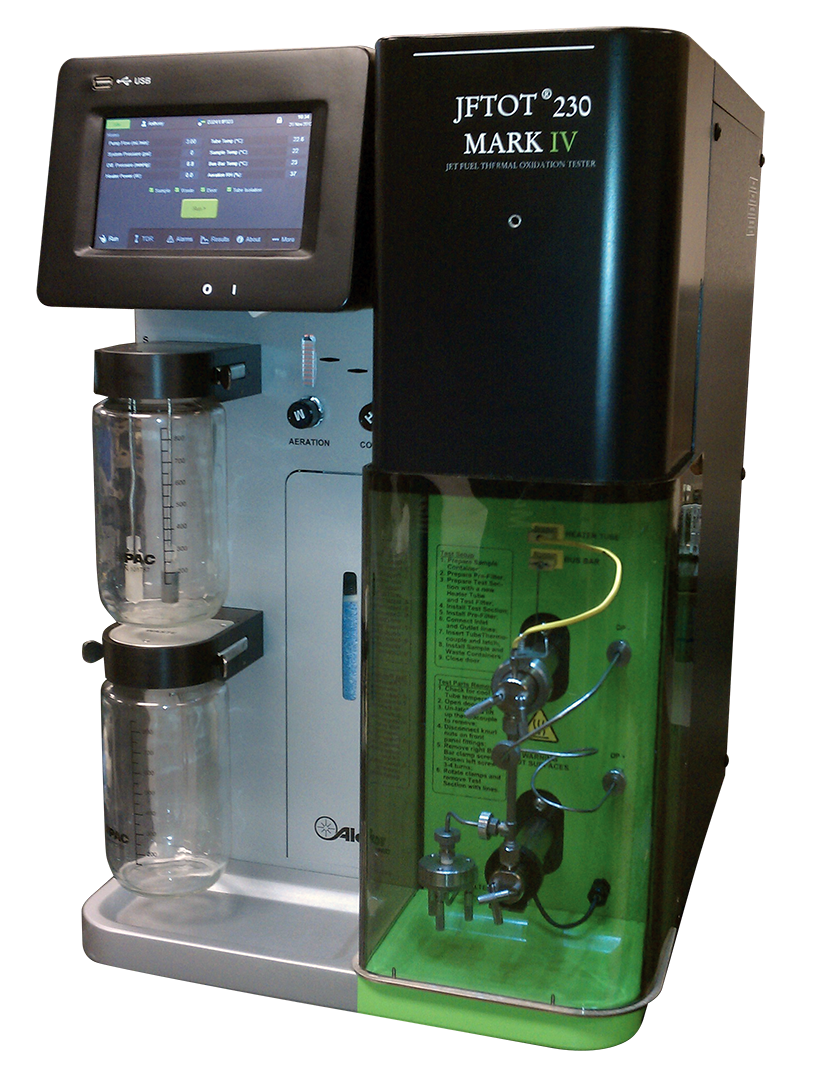
JFTOT® IV

JFA-70Xi
PAC Powered by Phase Technology’s JFA-70Xi jet fuel analyzer is the world’s first instrument that performs three crucial tests in one unit—freeze point, viscosity and density. And, it does it all in less than 15 minutes!