


Gasoline Group Type Analysis: Accuracy vs. Simplicity
 Standard & Regulations
 Article
 Nicole Lock

Published: August 11, 2026 | Last Updated: October 15, 2026
Gasoline group type analysis helps refineries balance fuel quality, regulatory compliance, and blending costs. As fuel formulations become more complex, laboratories must weigh faster testing against the precision needed for confident decisions. Here’s why direct measurement still matters.
Gasoline Is Defined by Composition, Not Averages
Gasoline is a carefully controlled blend of hydrocarbons and oxygenates. Its performance, emissions characteristics, and regulatory compliance depend on the balance of its components. These include paraffins, olefins, naphthenes, aromatics, and oxygenates.
Over time, gasoline composition has become more complex. Several developments have contributed to this change.
Catalytic cracking and reforming increased olefinic and aromatic content. Unleaded and reformulated fuels introduced new regulatory requirements. Oxygenates also added new blending components to meet octane and emissions targets.
These developments improved fuel performance but narrowed the limits within which refiners operate. As a result, accurate group type data plays a central role in blending, compliance, and optimization.
Confidence in Data Directly Impacts Blending Economics
Analytical uncertainty has real financial consequences for refineries. When laboratories cannot confidently measure gasoline composition, refiners often introduce larger safety margins into their blending operations.
This uncertainty can lead to several outcomes. Refineries may blend further from regulatory limits or underutilize lower-cost components. They may also use premium blending streams more conservatively.
These practices can result in product giveaway, creating recurring financial losses. Even small uncertainties in regulated parameters, such as aromatics or olefins, can affect profitability across large production volumes.
Precision and reproducibility are therefore more than laboratory performance metrics. They help determine how closely refineries can operate to their actual blending limits.
Why Direct Gasoline Group Type Analysis Matters
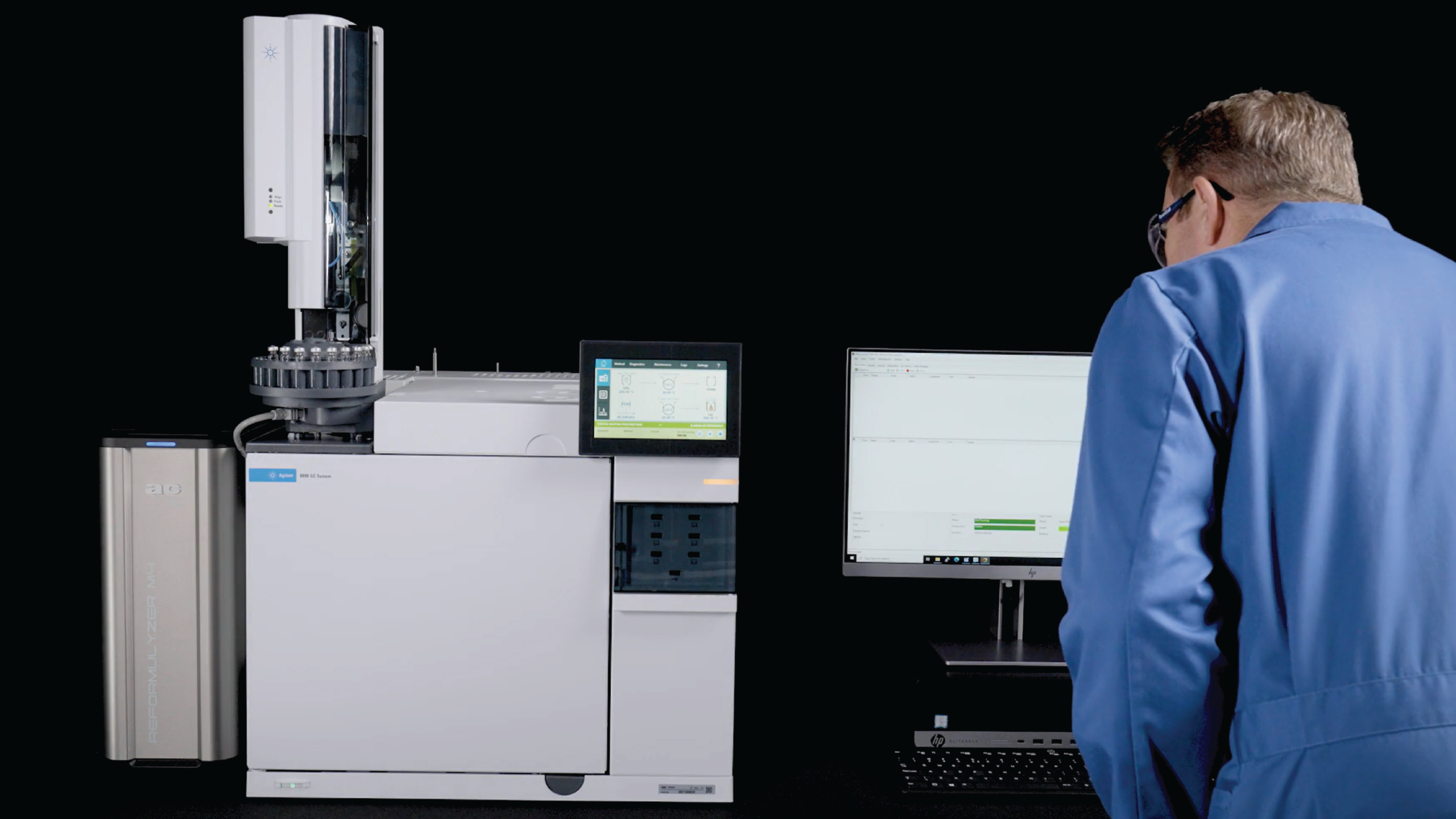
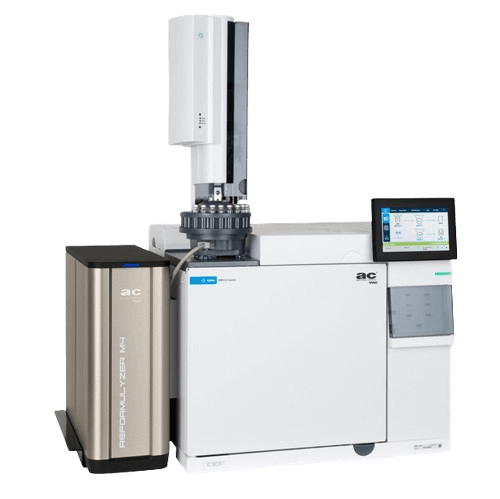
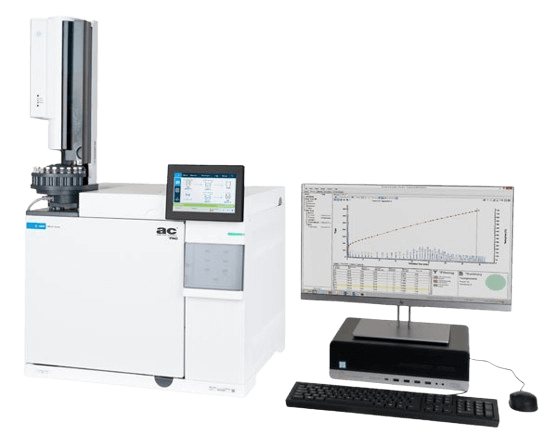
The Reformulyzer® uses multidimensional gas chromatography (MDGC) to measure gasoline composition directly.
Developed in collaboration with refinery experts, the technique has undergone continuous optimization for over 40 years. Its purpose is to address the complex composition of modern gasoline.

Rather than estimating composition through correlations or indirect detector responses, the Reformulyzer separates and measures hydrocarbon groups directly.
Its measurement approach includes:
- Aromatics: Separation by polarity
- Paraffins and naphthenes: Separation by boiling point and molecular size
- Olefins: Measurements and reporting as distinct components
This approach helps maintain consistent results as gasoline formulations change. These changes may involve different crude sources, seasonal blending practices, or oxygenate concentrations.
ISO 22854: A Common Analytical Reference
Direct measurement also forms the basis of ISO 22854, the EN 228 referee method for gasoline group type analysis. Referee methods are often associated with regulatory compliance and dispute resolution. However, their value extends beyond these applications.
A recognized referee method provides a common analytical reference for laboratories, blending operations, commercial teams, and regulatory stakeholders. Third-party testing laboratories also benefit from this consistency. When these groups rely on the same analytical results, they can make operational decisions with greater confidence.
Reliable measurements can also reduce the need for excessive blending safety margins. This allows refineries to set targets closer to specification limits while maintaining compliance.
In turn, greater measurement confidence can help refiners access blending flexibility that analytical uncertainty would otherwise restrict.
Precision Enables More Confident Blending
Interlaboratory studies of established group type methods demonstrate strong repeatability and reproducibility for key regulated components. For refinery and terminal operations, reliable measurements can support tighter blending targets and fewer reblends or reroutes. They can also reduce the risk of specification violations.
Consistent analytical results provide another benefit: greater confidence when defending measurements during audits or disputes. These advantages become especially important when analytical decisions affect large fuel volumes and significant commercial outcomes.
In these situations, measurement confidence may offer greater value than modest reductions in analysis time.
Simplification as a Tool, Not a Substitute
New analytical technologies give fuel laboratories more options for testing and analysis. Faster methods can be especially useful for screening applications and targeted investigations.
However, speed should not be the only consideration when selecting an analytical method.
When gasoline composition affects compliance and blending economics, laboratories must consider several additional factors. These include traceability to recognized standards, performance across changing fuel compositions, and the impact of analytical uncertainty.
From this perspective, the Reformulyzer® serves as more than an analytical instrument. Its direct-measurement approach helps laboratories manage risk and maintain confidence when operating near specification limits.
Conclusion: Matching the Method to the Decision
Modern gasoline formulations have increased the demands placed on refineries and their laboratories. Analytical methods must now support faster, more precise, and more economically significant decisions.
Simplifying testing procedures can provide meaningful benefits when it supports those decisions. However, when accuracy, defensibility, and blending confidence are essential, direct composition-based analysis remains a reliable foundation.
Ultimately, the goal is not sivmply to make gasoline analysis faster or easier. It is to deliver trustworthy results that help refineries operate closer to specification limits, reduce product giveaway, and maintain compliance.
Related Resources

 Gas Chromotography
 Article
Gas chromatography (GC) is a vital tool for separating and analyzing compounds that can be vaporized without decomposition.
Read More
ASTM D8396 is shaping the future of compositional characterization in synthetic aviation fuels (SAF) and proving that GCxGC isn’t just a tool for research.
Read More
Utilizing the AC SeNse detector when using gas chromatography for the analysis of ultra-low sulfur compounds in gaseous fuels is a robust solution, providing ultra-low...
Read More


