


Choosing the Right Level of Simplicity in Gasoline Analysis
 Standard & Regulations
 Article
 Nicole Lock

Choosing the Right Level of Simplicity in Gasoline Analysis
In fuel laboratories, “simplification” is often discussed as a goal: shorter analyses, fewer steps, streamlined workflows. These are valid objectives, particularly as laboratories face increasing throughput demands and staffing constraints. At the same time, gasoline itself has not become simpler. If anything, modern fuels have become more compositionally constrained and economically sensitive.
The challenge for laboratories, therefore, is not whether analysis can be simplified, but rather, where simplification supports confident decision‑making, and where it introduces risk.
Gasoline Is Defined by Composition, Not Averages
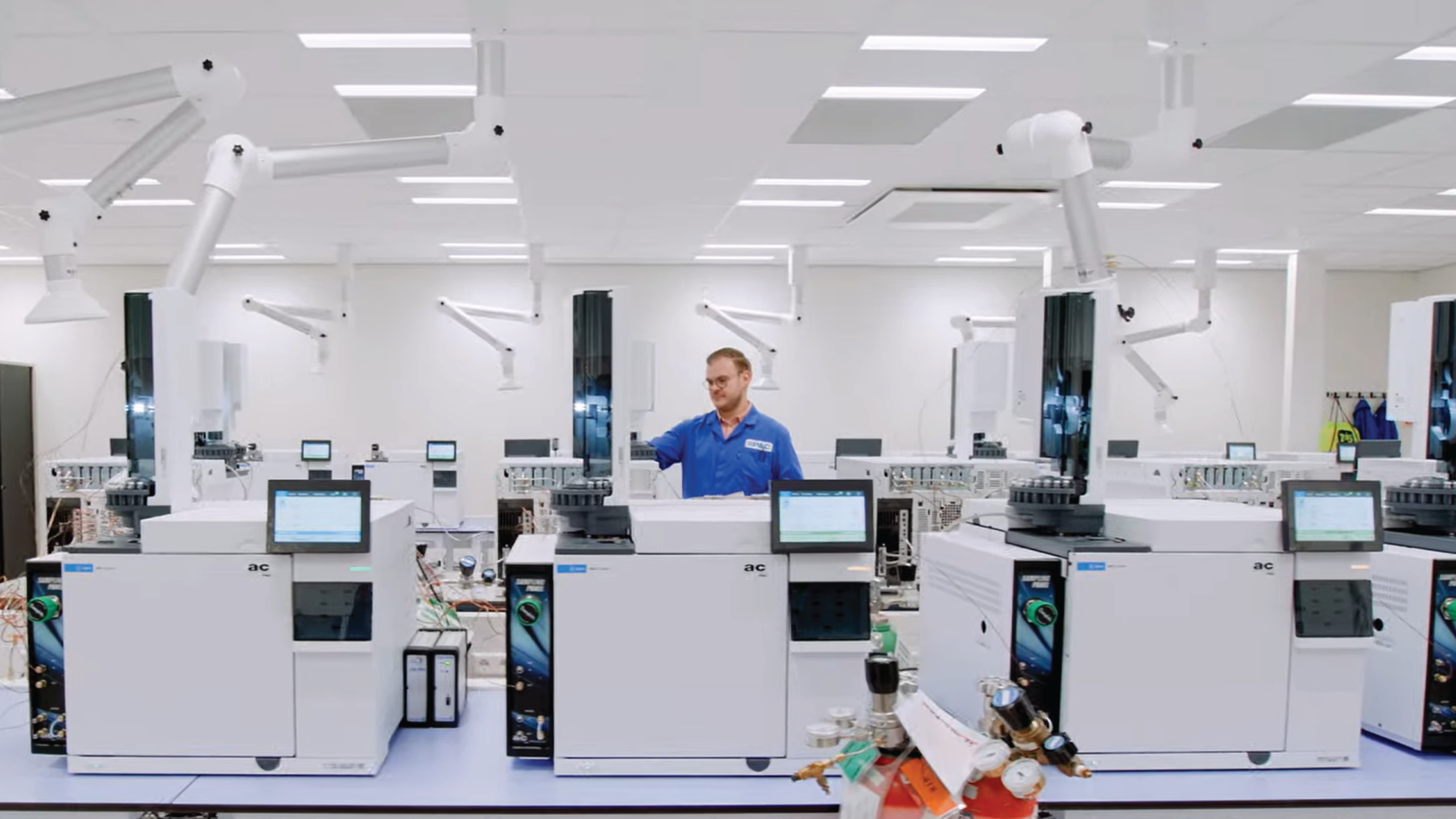
Gasoline is not a single substance but a controlled blend of hydrocarbons and oxygenates. Its performance, emissions behavior, and regulatory compliance are determined by the balance of group types: paraffins, olefins, naphthenes, aromatics, and oxygenates rather than by bulk properties alone.
Over the last few decades, fuel evolution has steadily increased compositional complexity:
- Catalytic cracking and reforming introduced higher olefinic and aromatic content
- Unleaded and reformulated fuels imposed new regulatory limits
- Oxygenates introduced new classes of blending components to meet octane and emissions objectives
Each step forward improved fuel performance but tightened the boundaries within which refiners operate. As a result, accurate group‑type information has become central to blending, compliance, and optimization decisions.
Confidence in Data Directly Impacts Blending Economics
In blending operations, analytical uncertainty has practical consequences. When laboratories lack confidence in composition data, refiners respond by introducing safety margins:
- Blends move further away from regulatory limits
- Lower‑cost components are underutilized
- Premium streams are used more conservatively
This phenomenon, typically referred to as product giveaway, can represent a significant, recurring economic impact for the refineries. Even small increases in uncertainty for regulated parameters such as aromatics or olefins can translate into meaningful margin loss when applied across large production volumes.
Precision and reproducibility are not academic metrics. They determine how closely a refinery can operate to its true constraints.
Why Direct Group Type Measurement Still Matters

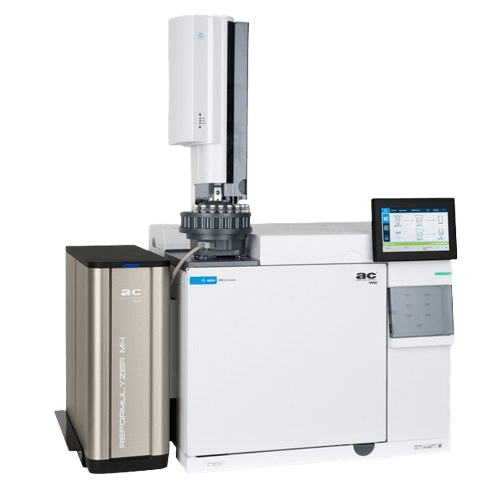
The Reformulyzer®, a multidimensional gas chromatography (MDGC) technique, was developed in collaboration with refinery experts and has been continuously optimized over the last 40 years to address the unique compositional complexity of gasoline. Its design philosophy is straightforward: separate, measure, and report each hydrocarbon group directly.
Rather than reconstructing composition from correlations or indirect detector responses, the Reformulyzer physically separates:
- aromatics by polarity
- paraffins and naphthenes by boiling point and molecular size
- olefins through selective trapping
- oxygenates as explicit reported components.
Because each group is measured independently, results remain stable as gasoline formulations evolve, maintaining consistency across changes in crude slate, seasonal blending practices, and oxygenate content.
This direct-measurement approach is also the reason multidimensional gas chromatography was selected as the basis for ISO 22854, the EN 228 referee method for gasoline group-type analysis. While referee methods are often associated with dispute resolution and standards compliance, their value extends far beyond those applications. A recognized referee method provides a common analytical reference across refinery laboratories, blending organizations, commercial teams, regulatory stakeholders, and third-party testing laboratories.
When all parties can rely on the same analytical results, operational decisions can be made with greater confidence. This has practical consequences for blending economics: higher confidence in the measurement reduces the need for excessive conservatism, allowing blending targets to be set closer to specification limits while maintaining compliance assurance. In effect, the confidence provided by a direct-measurement referee method can help unlock usable blending space that might otherwise remain inaccessible because of analytical uncertainty.
Precision Enables Tighter, More Confident Operation
Interlaboratory studies associated with established group‑type methods show strong repeatability and reproducibility for key regulated components. In practice, this translates into:
- Tighter blending targets
- Fewer re‑blends and reroutes
- Reduced risk of specification violations
- Greater confidence when defending results during audits or disputes
For laboratories supporting refinery or terminal operations, this level of confidence often outweighs marginal gains in analysis time – particularly when decisions affect large material flows and commercial outcomes.
Simplification as a Tool, Not a Substitute

New analytical technologies expand the options available to fuel laboratories and can be valuable for screening or targeted investigations. However, when gasoline composition directly drives compliance and blending economics, method selection must prioritize more than speed alone.
Traceability to recognized standards, stability across changing fuel matrices, and control of downstream uncertainty all become critical. From this perspective, the Reformulyzer® is best understood not as a complex solution, but as a risk‑management tool delivering results that can be trusted when operating close to specification limits.
Conclusion: Matching the Method to the Decision
The evolution of gasoline has shifted complexity from engines to refineries and ultimately to laboratories. Analytical methods must therefore support decisions that are tighter, faster, and more economically consequential than ever before.
Simplification has value when it supports those decisions. But when accuracy, defensibility, and blending confidence are paramount, direct, composition‑based analysis remains the more reliable foundation. The question is not whether analysis can be simpler, but whether it delivers the confidence required to operate closer to the limit, with less giveaway and fewer surprises.
Related Resources

 Gas Chromotography
 Article
Gas chromatography (GC) is a vital tool for separating and analyzing compounds that can be vaporized without decomposition.
Read More
ASTM D8396 is shaping the future of compositional characterization in synthetic aviation fuels (SAF) and proving that GCxGC isn’t just a tool for research.
Read More
Utilizing the AC SeNse detector when using gas chromatography for the analysis of ultra-low sulfur compounds in gaseous fuels is a robust solution, providing ultra-low...
Read More


