

 PAC
PAC
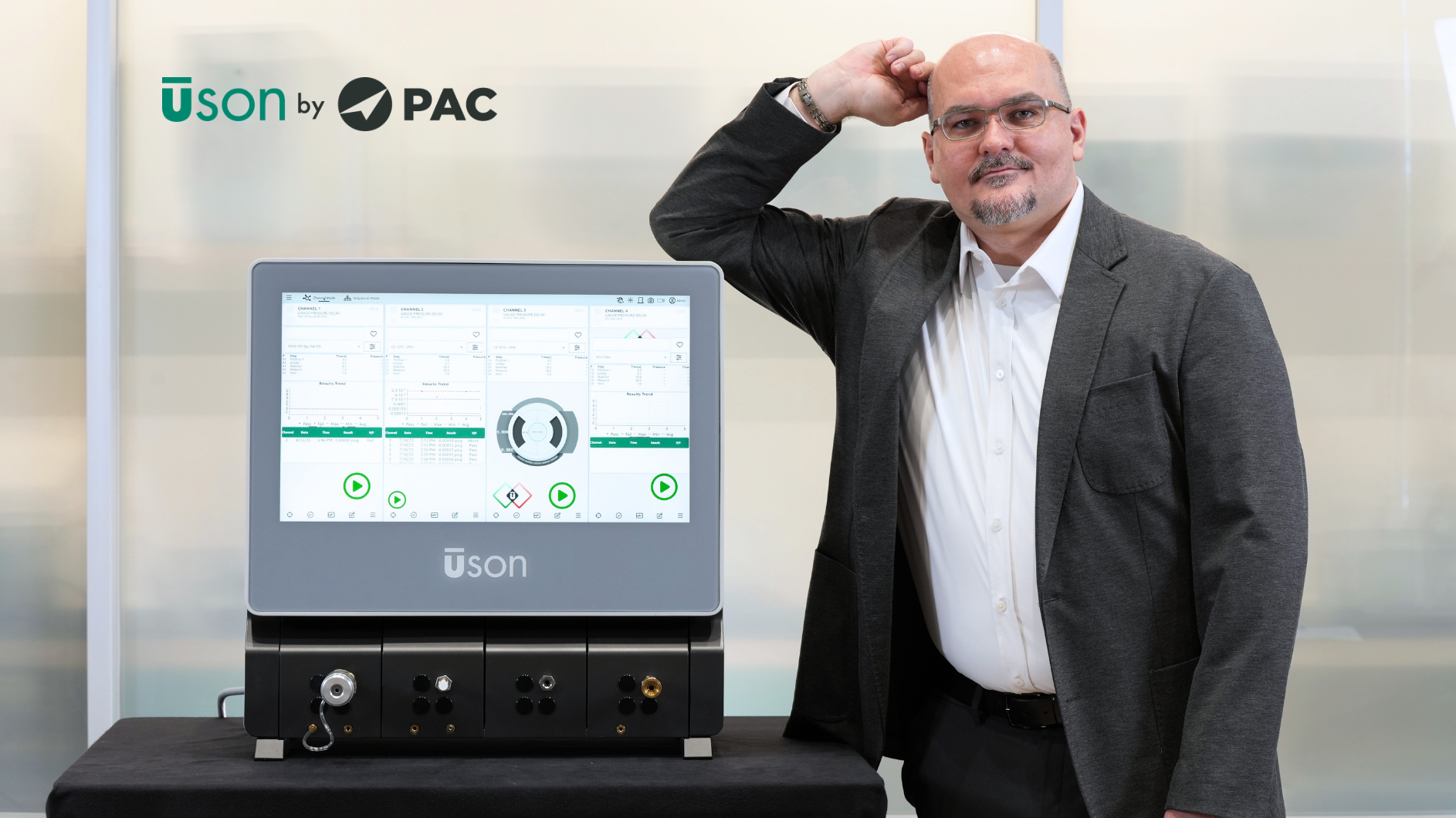
Meet Uson’s Head of Engineering and the catalyst behind the Astra Dash, Allen. Read our full interview to learn where leak testing typically breaks down and what it takes to build systems that align with how R&D and manufacturing teams actually work.
The Leak Test Isn’t the Bottleneck Anymore
Inside the Next Frontier in Leak Testing with Uson’s Engineering Department Head, Allen Simpson
Leak testing has always been a requirement in medical device manufacturing. But for many teams, it has also been a constraint. Systems that don’t adapt, test methods don’t scale, and data that takes too long to interpret can quietly slow development and complicate validation.
Engineers dead with that tension every day.
Meet Allen
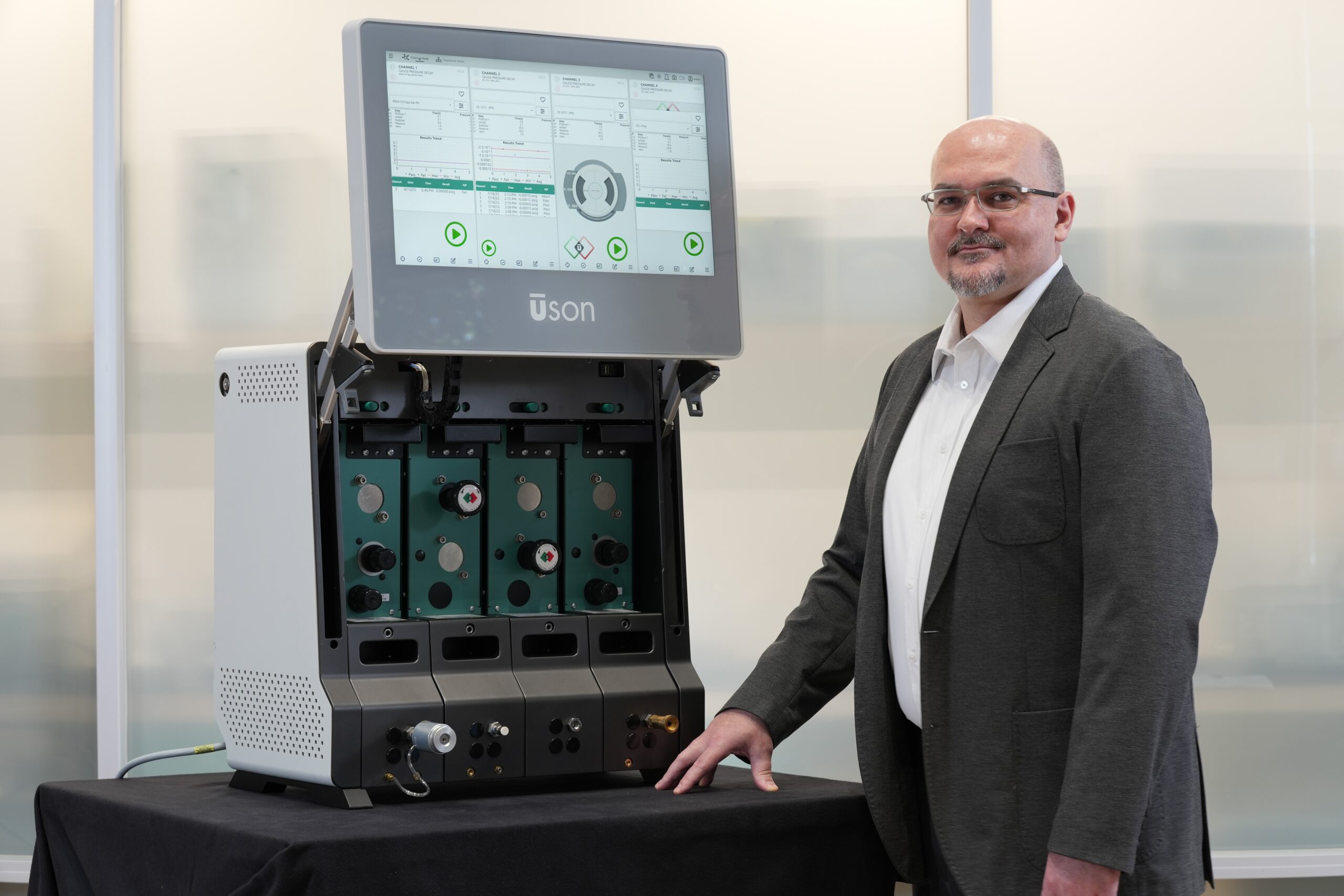
We spoke with Allen Simpson, Uson’s Engineering Department Head and catalyst behind the Astra Dash – the world’s first modular leak testing platform. He illuminated where leak testing typically breaks down, and what it takes to build systems that align with how R&D and manufacturing teams actually work.
Learn where leak testing typically breaks down and how to build systems that align with R&D and manufacturing teams from Allen Simpson, catalyst behind the Astra Dash.
Can you walk us through your background and how leak testing became a focus in your work? What shaped your perspective on it?
“Leak testing wasn’t something that came from just one role – it’s been a constant across my career. I’ve worked in a range of industries, from industrial systems, some putting out 1.5M Nm of torque before moving into medical devices, including Class III applications and microscopic neurovascular devices. Along the way, I’ve tested everything from simple subcomponents to fully finished, highly complex devices, in both development and manufacturing roles.
“When you’ve gone through that enough times, you start to notice the same patterns. What works, what creates friction, and what’s missing when you’re trying to move quickly in development or solve problems under pressure. A lot of the thinking behind Astra Dash really came from those experiences and building the kind of system I wished I’d had at the time.”
From your experience, what makes leak testing particularly challenging in medical devices?
“It’s not the technical side – it’s everything around it. In medical device leak testing, especially during R&D and early validation, you need a really high level of confidence in your data. You’re making decisions that directly impact device performance and patient safety, so the margin for error is small.
“At the same time, you’re usually working with constraints that are non-technical. In a lot of development environments, teams are trying to prove out a concept using whatever leak testing equipment that have, even if it’s not the right fit for the device or test method they actually need. I’ve been in that situation myself more than once.
“You can get results, but not always the level of resolution or repeatability you need to confidently make decisions, and that’s where things start to get tricky – especially as you move from R&D into validation and production.”
Where Leak Testing Breaks Down
Where do you believe teams struggle the most when it comes to leak testing 4during development and manufacturing?
“One of the biggest challenges in medical device leak testing is simply using the wrong tool for the job. In R&D, speed usually wins, so teams work with whatever equipment they have on hand. That might mean using the wrong pressure range, the wrong test method, or even the wrong type of leak testing just to move things forward.
“The issue is that those early decisions don’t stay contained. As you move into design verification and validation (DV & V), where data quality and repeatability really matter, those compromises tend to carry through, and that’s when the real challenges show up.”
Traditional systems have been around for a long time. Where do they fall short?
“Most systems are built for a specific purpose, and they do that job well. The problem is when things change. New device designs, multiple SKUs, shifting requirements. Suddenly, what worked before becomes harder to adapt.
“That’s where you start seeing more equipment, extra line clearances, or just more time spent trying to make things fit. Over time, that lack of flexibility adds up – especially as teams more from R&D into production.”
At what point did you realize these weren’t just isolated issues, but something that needed to be solved differently?
“At a certain point, it stops feeling like a one-off problem. When you’ve gone through enough development cycles and you’re seeing the same challenges come up, using the wrong tester in R&D, struggling to carry methods into DV & V, reworking tests later on, you realize it’s not the team… it’s the tools. That was really the turning point. The goal wasn’t to improve an existing leak tester, it was to rethink how leak testing should work across R&D, validation, and production.
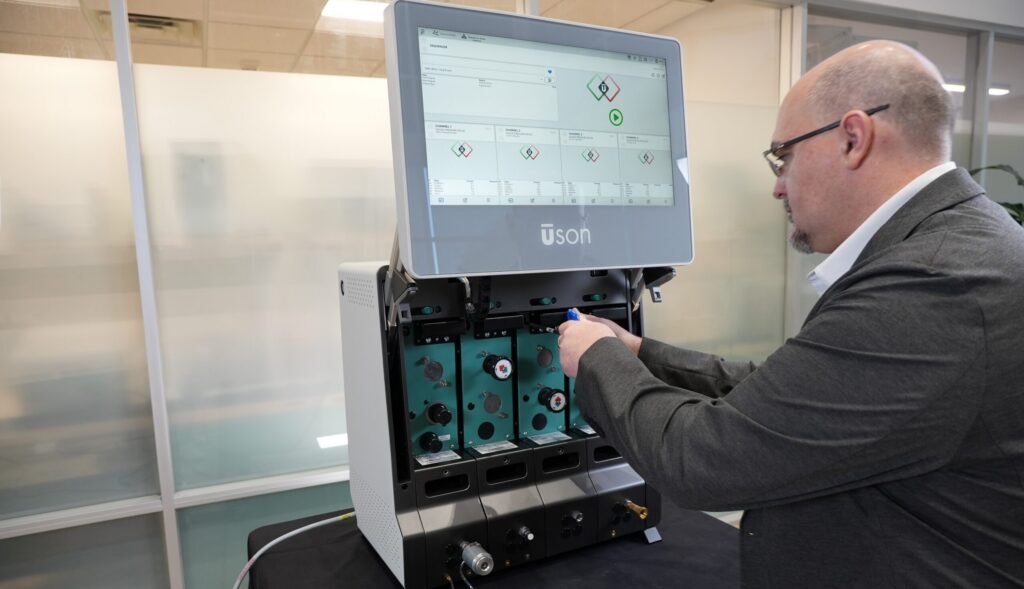
“Astra Dash was developed as a modular leak testing platform designed to adapt to different devices, test methods, and manufacturing environments without forcing those compromises along the way.”
Rethinking the Approach
When you started working on a new leak testing solution to address these challenges, what did you want to do differently?
“The goal was to take that rigidity out of the equation. Instead of building around a fixed leak test, the idea was to create something that could adapt to the device under test itself, especially across R&D, validation, and production.
“That’s where the modular approach came in. Being able to change configurations quickly and actually match the test method, pressure range, and setup to what the device needs, instead of forcing it into something that’s already there.”
Was there a point where you realized this approach would actually land with R&D and manufacturing teams?
“That moment really came during early customer validation. Going into it, there were a lot of different expectations, and honestly, they didn’t always line up. What stood out was how quickly it clicked. It wasn’t just that Astra Dash worked, it was that Astra Dash could handle multiple leak testing requirements at once in a way people hadn’t really seen before. That’s where you started hearing things like, “This is exactly what we’ve been trying to do.”
From an engineering standpoint, what did it take to make that happen?
“Astra Dash isn’t an update to an existing leak testing system; it is a completely new platform. Everything was developed in-house, from the mechanical design to the software and electronics, to solve problems that traditional leak testers weren’t designed to handle.”
“The harder part wasn’t just building something capable – it was making it usable with the ease of a consumer product. There’s always a risk that more capability leads to more complexity, especially in a production environment. The focus here was making sure that didn’t happen.”
Impact on R&D and Manufacturing
How does a more flexible approach to leak testing change the way R&D teams work?
“It takes away a lot of the workarounds. Instead of trying to fit their development process around the equipment, teams can run the leak tests they actually need, when they need them, especially during early R&D and design verification.
“That alone makes development smoother, and it reduces how much has to be reworked later when things move into validation and production. That’s why Astra Dash makes such a difference for R&D stages, with it you’re no longer limited by the tester, you’re able to test the device the way it was intended.”
There’s usually a trade-off between speed and quality. How do you see that playing out in leak testing?
“A lot of that trade-off comes from misalignment early on. If the test method doesn’t really fit the device, you end up doing more iterations later to fix it, especially during DV & V. When that alignment is there from the beginning, things move faster naturally. You’re not cutting corners– you’re just avoiding unnecessary steps and improving data quality from the start.”
Interconnectivity & Functional Testing
How important is integration in today’s manufacturing environments?
“It’s becoming a baseline expectation, especially in medical device manufacturing. Leak testing can’t sit on its own anymore, it needs to connect into production systems, MES and QMS platforms, and overall quality workflows. Without that integration, you’re adding manual steps, creating gaps in traceability, and losing visibility into your data. Over time, that slows down both production and decision-making.”
You mentioned functional testing earlier. What does that actually mean in practice?
“Traditionally, leak testing answers the simple question of “does the device pass or fail?”. Functional testing builds on the by capturing more insight within the same test cycle.
“It can look at things like how a device fills, whether there are occlusions, or how components behave – such as check valves – all which running a standard leak test. That means instead of running multiple tests across different systems, you’re getting more complete data from a single test cycle. That’s exactly what the Astra Dash provides – a single point approach, allowing teams to replace multiple tests, or even multiple testers.”
How does that data actually become usable on the floor?
“It really comes down to timing and accessibility. The faster you can understand the result, the faster you can act on it. Bringing that analysis closer to the test itself makes a big difference. Engineers don’t have to export data or wait to review it somewhere else. They can see what’s happening and respond right away.
“By bringing analysis closer to the leak test itself, engineers and technicians don’t have to export data or wait to review it in another system. They can see what’s happening in real time, interpret the results quickly, and make decisions on the spot.”
Looking Ahead
As manufacturing becomes more connected, how do you see leak testing evolving over the next 5–10 years?
“It’s moving toward being more integrated into the overall manufacturing process. Less of a standalone checkpoint and more of a continuous input into how medical devices are developed, validated, and produced.
“What will define effective leak testing going forward is flexibility and better insight. The ability to adapt quickly to different devices and requirements, while also getting more meaningful, actionable data out of every test cycle. That’s really the thinking behind Astra Dash, building something that’s as simple as you want it to be, but as powerful as you need it to be. That’s ultimately what allows teams to move faster without increasing risk, especially as products become more complex and expectations around quality and traceability continue to rise.”
To hear more directly from Allen and see how these ideas come to life in practice, you can watch his full walkthrough of the Astra Dash and hear about the thinking behind it.
If you’re working through similar leak testing challenges in R&D or production, there’s often value in comparing notes. Allen regularly connects with engineering teams to talk through specific applications, testing strategies, and where flexibility can make the biggest impact.
Featured Products
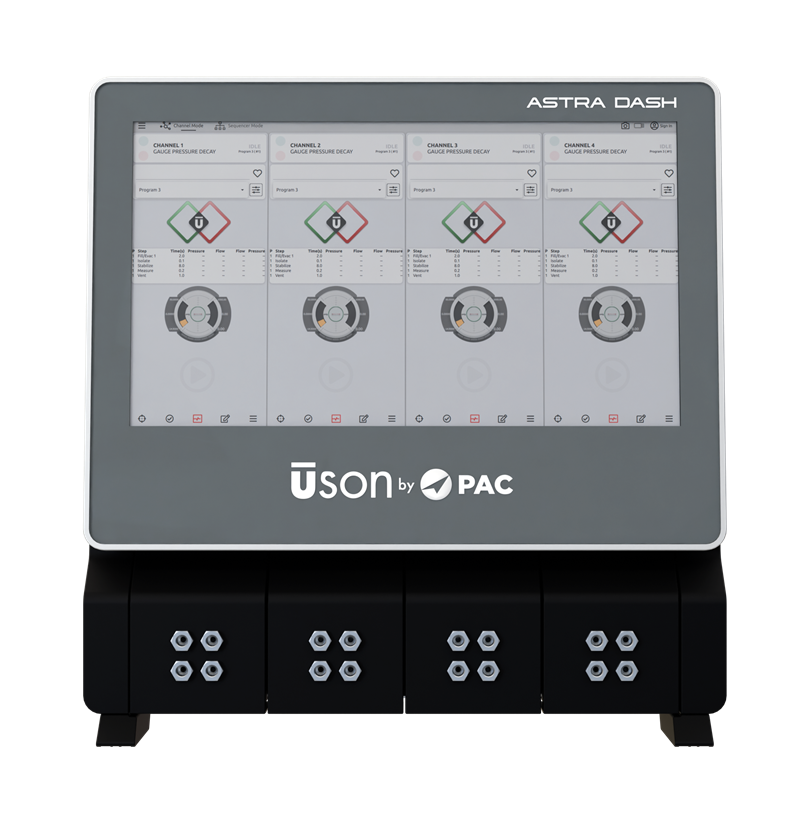
Astra Dash
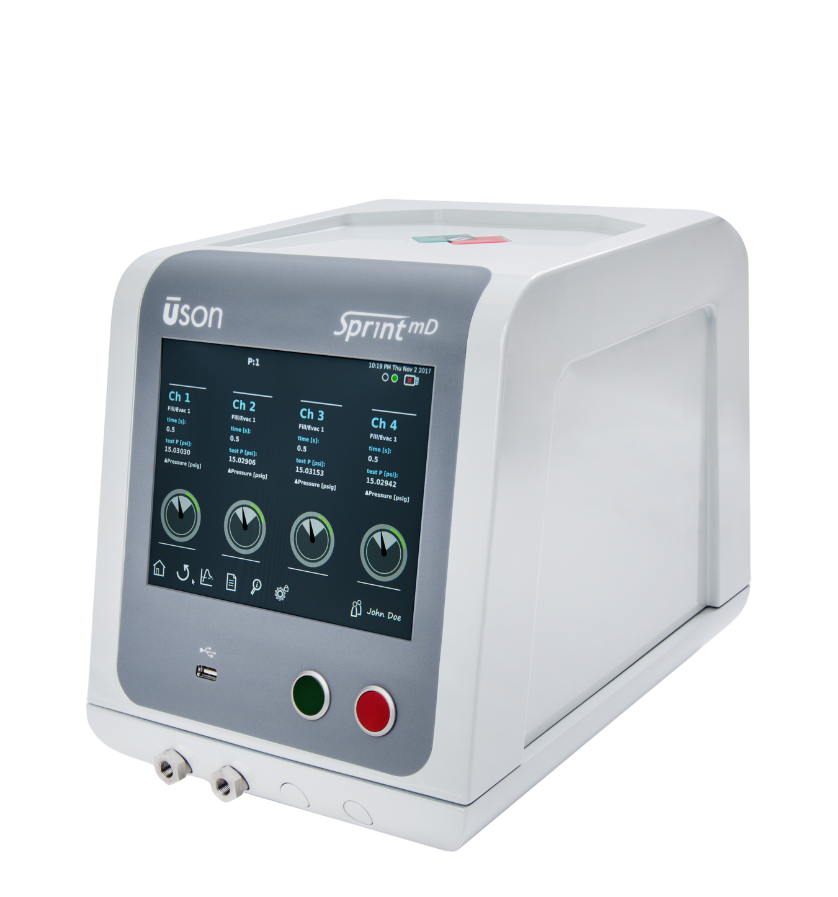
Sprint mD
Related Resources
 PAC Products
 Tech Notes
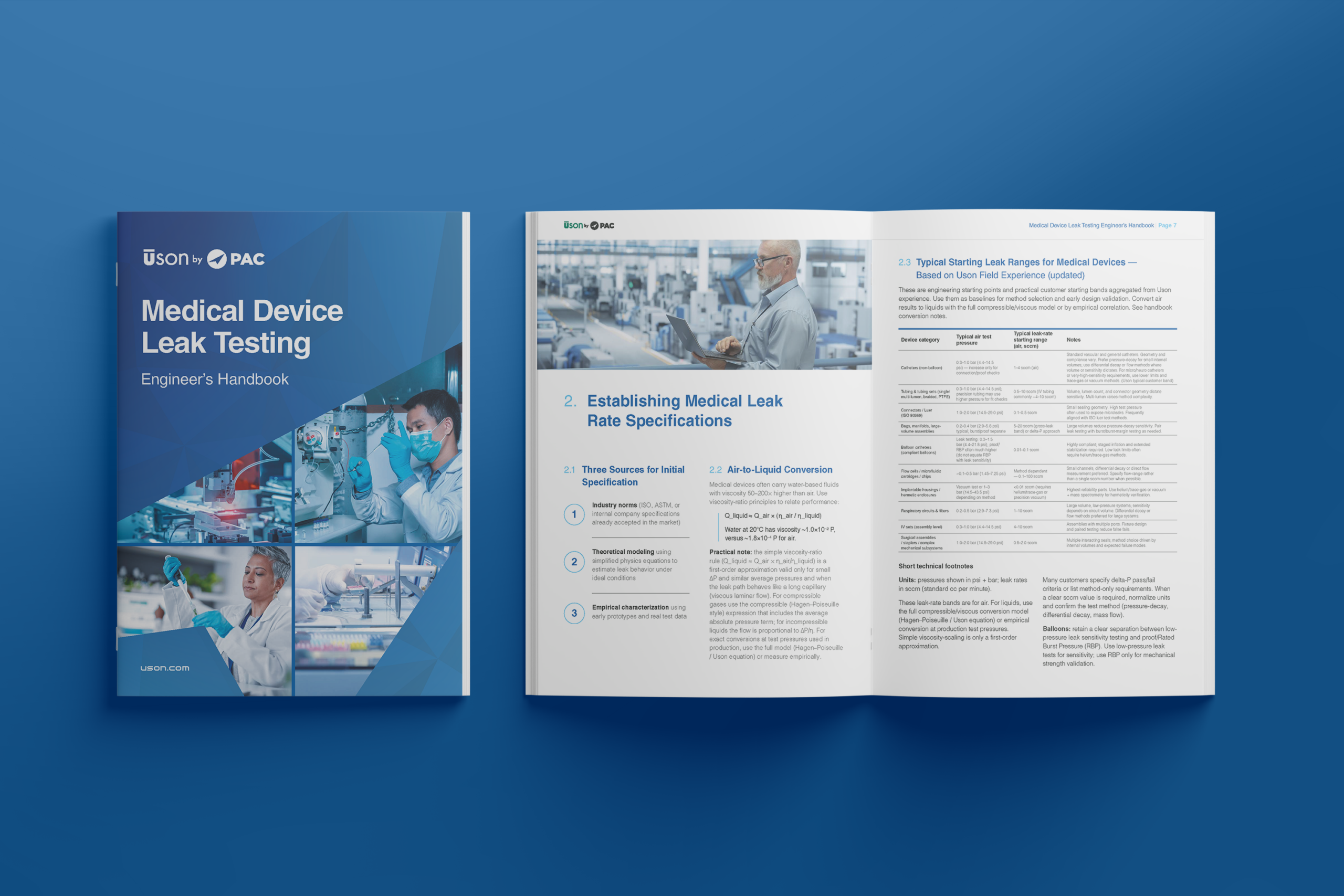
Discover Uson by PAC’s comprehensive Medical Device Leak Testing Guide – designed to provide engineering‑sound guidance for medical device leak testing, aligned with industry best...
Read More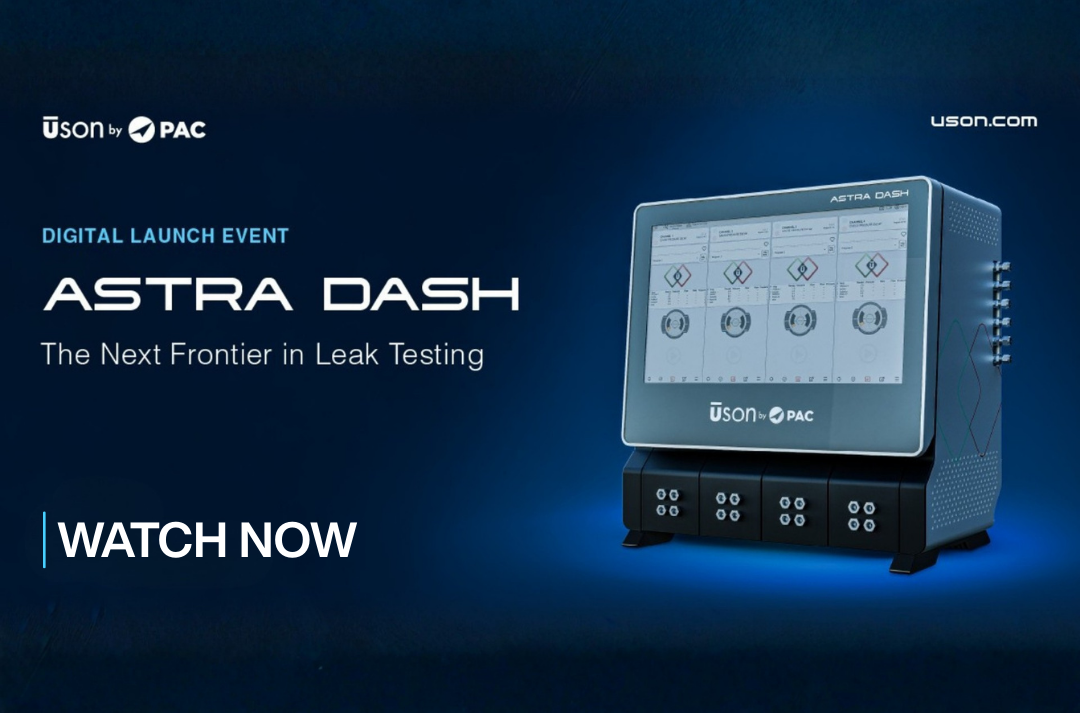
Tune into our Astra Dash launch event and meet the world’s first modular, pneumatically independent multichannel leak tester.
Read More


