


OptiFZP: Freeze Point
Fast, Accurate, and Reliable Freezing Point Determination

State-of-the-Art Solution
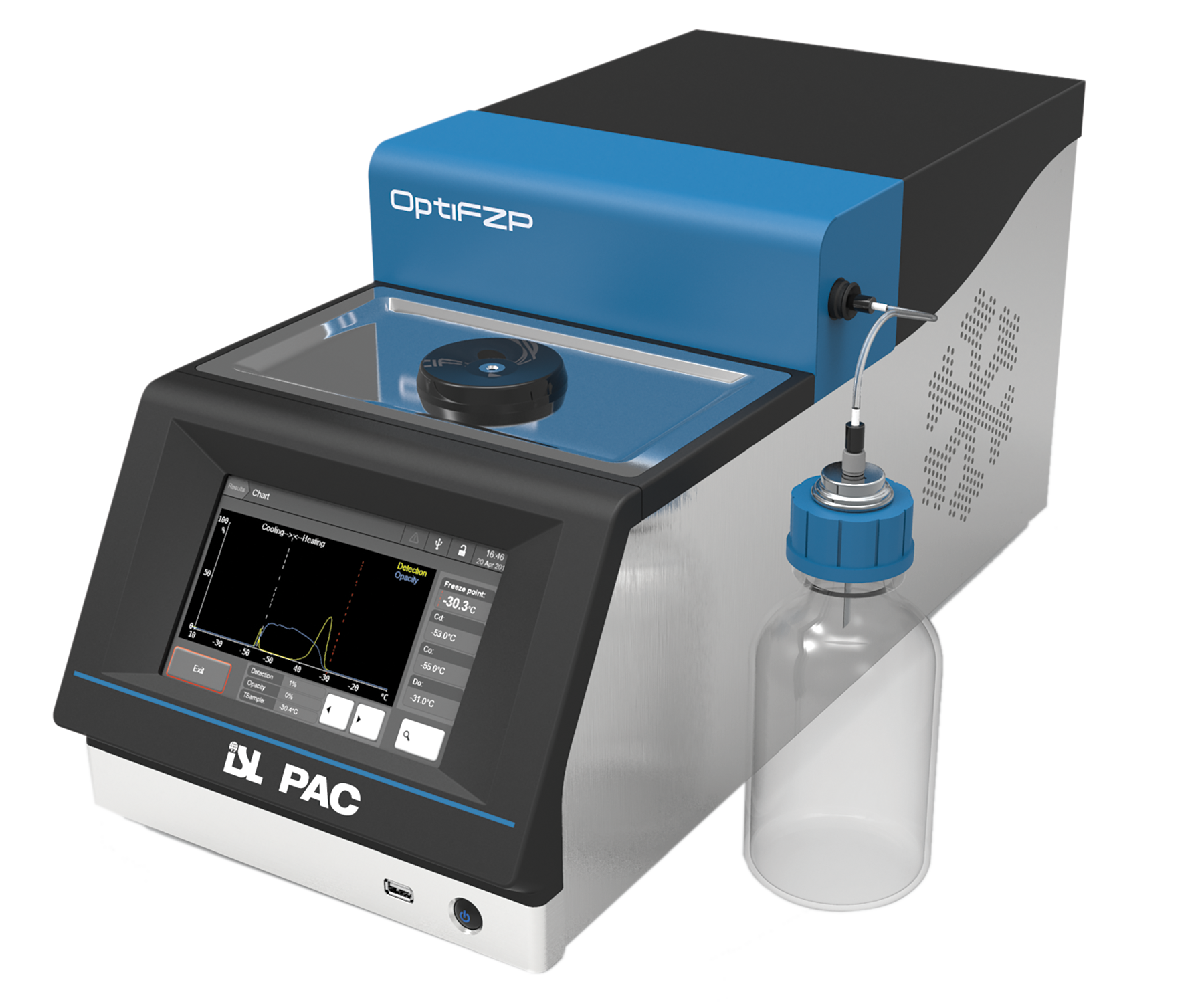
Designed to increase the laboratory productivity through automation, the ISL OptiFZP precisely measures the Freezing Point of jet fuels completely unattended, therefore reducing the operator time but also improving greatly the analysis performance.
Product Overview
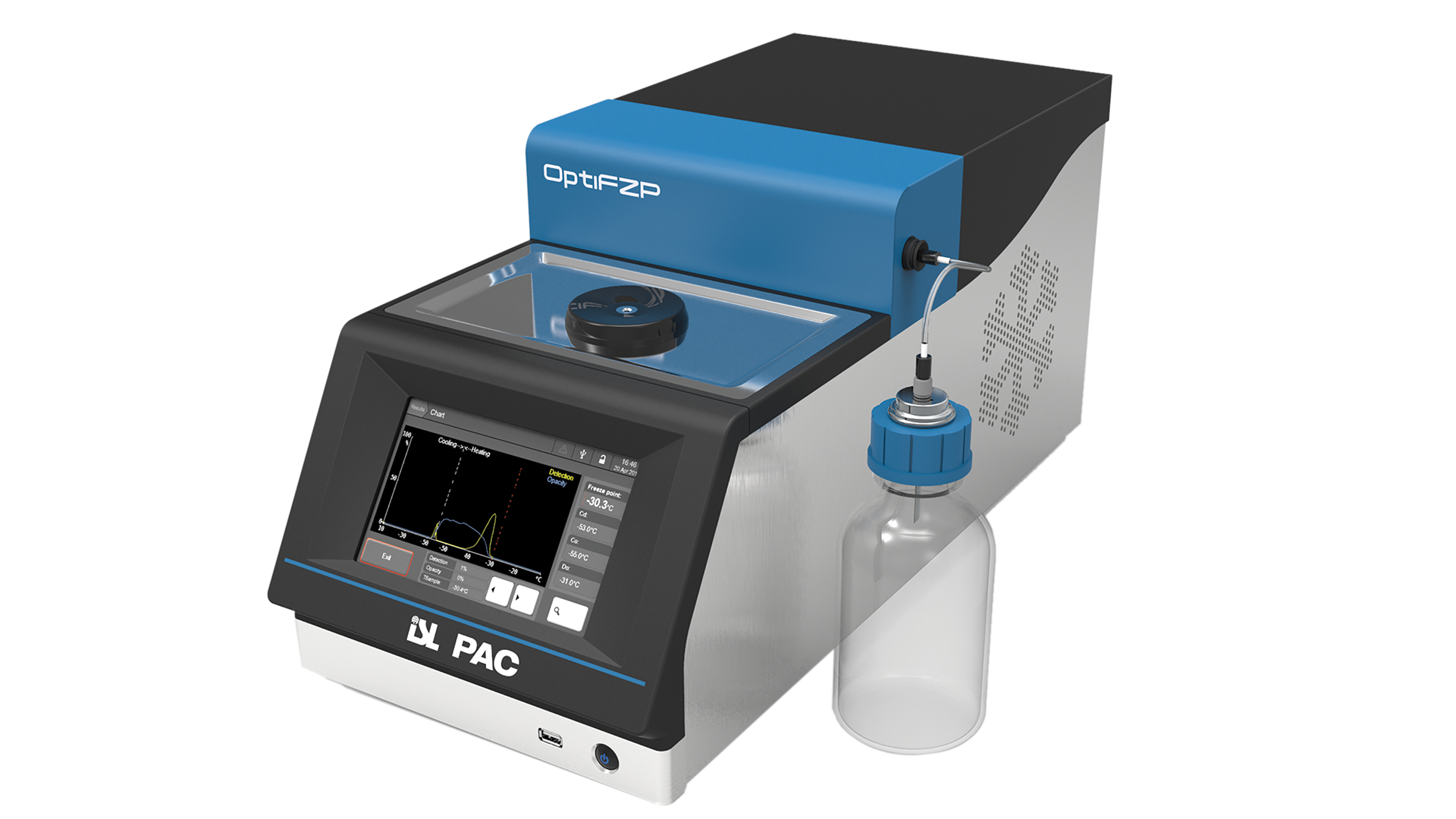
The next generation Freeze Point Analyzer offers proven technology used by labs worldwide. The powerful internal cooling system can measure up to -100C (-148F) without the need of an external cooling bath. The unique patented detection cell provides ultra-high accuracy with unmatched precision, while maintaining its compact footprint. The newly designed OptiFZP includes a color touchscreen and advanced electronics that allows network printing and electronic data transfer from the analyzer to a PC.
Proven to provide highly precise measurements, OptiFZP’s ASTM D7153 method is an approved freezing point test method in all of ASTM D1655, ASTM D7566 and Def Stan 91-091 global jet fuel specifications for testing all types of jet fuels, including sustainable aviation fuels (SAF).
Key Features

Freeze Point Measuring Range down to -100°C

Fast and Accurate Freezing Point Determination in 15 Minutes

Superior correlation with manual method on contaminated samples

Compact Design with Built-in Cooling System

Self-Cleaning operation, no cleaning required
Built in QC-Chart for trend monitoring

Improved Productivity and Ease of Use With a New Touch-Screen and Advanced Electronics
One-button push operation
Specs
Test Methods & Precision
Standard Test Methods:
ASTM D7153 (IP 529), ASTM D2386 (IP 16), ISO 3013, JIS K2276 equivalent or better
Repeatability: 0.6 ºC
Reproducibility: 0.9 ºC
Performance
Detection: Optical detection (patented)
Cooling System: Internal Stirling Cooling
Measuring Range: Ambient down to -100⁰C (-148°F) , ⁰C or ⁰F configurable
Operation
Operator Time: ½ minute per test
Test Duration: 15 minutes
Sample Volume: 10 ml, including volume for cleaning
Sample Injection: Disposable 10 or 20 ml syringe
Cleaning: Self-cleaning operation, no cleaning required
Calibration: Automatic calibration routine for temperature measurement
5 correction points
Programmable calibration frequency
Calibration ticket printing
Documentation
Display: Screen size 7” (16/9) with resolution (800×480); resistive touchscreen with real time graphic display
Printing: Detailed detection curve tracking of fuel behaviors during the test; can be printed as part of test report.
Detailed test report in °C or °K with date & time stamped, sample information, test conditions, apparatus serial number
Result Documentation: 200 test runs (results) and 40 products (with cooling profiles)
QC-Functions: Automatic QC-sample handling and QC-Chart
Interface
User Interface: 7” color touch-screen, alpha-numeric data input, barcode reader
Languages: English, French, others on request
Printer: The list of compatible printers that are proven to work successfully are as follows:
By USB: Brother HL-3170 CDW, Lexmark CS 310, Ricoh SP C250N, HP OfficeJet Pro 8120, Brother HL-L5000D
By Ethernet: Ricoh Aficio SG 3110dn, HP Color LaserJet Pro M425dn
LIMS interface: Ethernet or RS232, Used defined Data String, Automatic LIMS transfer
Data Export: USB Memory Stick, Import into Excel
Password Protection: Different Access levels for Operator, Service or Lab Manager
Calibration & Diagnostics:
User defined Calibration Intervals
Automatic Diagnostic functions
Accessories: Barcode Reader, Printer, Calibration Probe
Utility Requirements
Electrical: 90V to 240VAC ±10% switchable; 50-60Hz ; 300W
Ambient Conditions: Temperature: max. 10° to 35°C; recommended 15° to 25°C
Humidity: 80% rel. at 35°C
Storage temperature: -15 to +55°C
Dimensions: 25 cm (10”) wide, 60 cm (24”) deep, 27 cm (11”) tall
Weight: 29kg, (64 lb)
Related Resources
 PAC Products
 Tech Notes
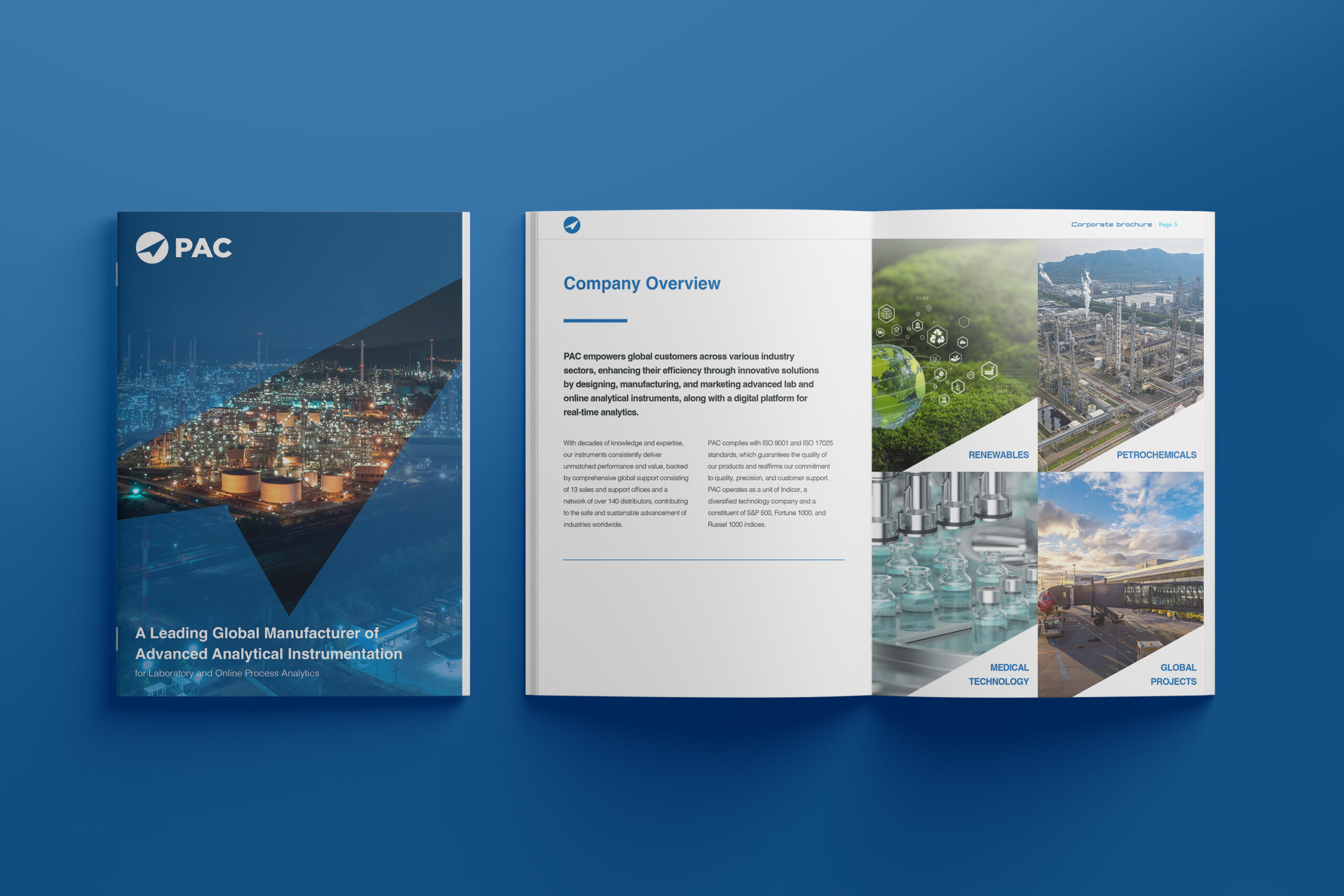
PAC Overview Brochure
Discover PAC’s comprehensive portfolio of solutions designed to elevate your laboratory operations, streamline process workflows, and deliver powerful digital insights. Download the full overview now...
Read More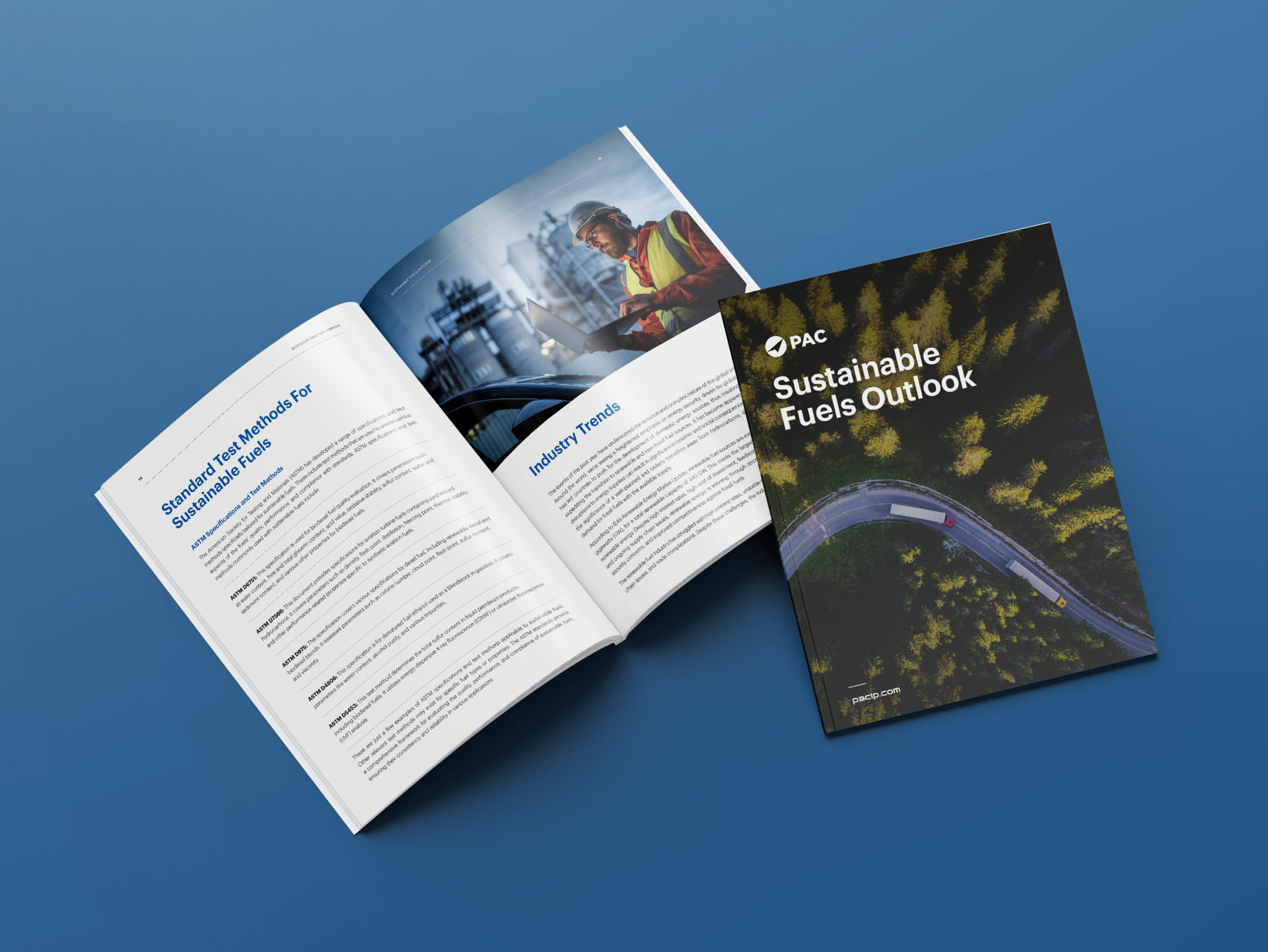
Guide: Sustainable Fuels Outlook
PAC’s Sustainable Fuels Outlook provides an in-depth analysis of the current energy industry, where regional differences in the pace of transition and global uncertainty shape...
Read More
Transforming the Industry with PACe Digital Ecosystem
Transforming the Industry with PACe Digital Ecosystem.
Read More


